Blonde brick, that warm, honey-toned masonry, is a versatile foundation for any home’s exterior. Unlike the heavy reds and browns of traditional brick, blonde varieties offer a lighter, more approachable canvas that reads contemporary or classic depending on what you pair it with. Whether your home sits in an urban setting or suburban neighborhood, choosing the right color scheme can amplify your brick’s natural warmth or create striking contrast. This guide walks you through seven proven palettes that work with blonde brick, from soft neutrals to bold accents, so you can envision your home’s transformation before picking up a brush.
Table of Contents
ToggleKey Takeaways
- Blonde brick color schemes work best when you acknowledge the brick’s warm undertones—observe your brick’s appearance in morning, afternoon, and evening light before selecting trim colors to avoid clashing combinations.
- Warm neutrals and cream trim create the most timeless pairing with blonde brick, while bold accents like navy, forest green, or charcoal doors add personality without overwhelming the light brick base.
- Test paint samples directly on your actual brick for 3–5 days at different times of day, as colors appear dramatically different under varying light conditions and in photographs.
- Modern minimalist schemes pair blonde brick with pure white trim and one bold accent (like a matte black door) for a contemporary feel, while classic palettes rely on proven combinations like crisp white trim with dark shutters.
- Consider your entire exterior—landscaping, hardscape colors, and architectural details—as part of your blonde brick color scheme to create a cohesive, intentional design.
Understanding Blonde Brick as Your Design Foundation
Blonde brick occupies a sweet spot in the color spectrum. It’s neither as stark as light cream nor as warm as golden or red-toned masonry, making it forgiving for most trim and accent colors. The key to working with it is recognizing that the brick itself sets your undertone. Most blonde brick has subtle warm (peachy or buttery) undertones, which means your complementary colors should acknowledge that warmth rather than fight against it.
When planning your scheme, consider the brick’s actual finish under different lighting conditions. Morning light may emphasize peachy notes, while afternoon sun can highlight cooler, sandier tones. Spend a week observing how your brick looks in full sun, shade, and at dusk. This simple step prevents choosing trim colors that clash in certain light. Blonde brick also photographs lighter than it appears in person, so if you’re relying on online inspiration photos, visit homes in your area with similar brick to calibrate expectations.
Warm Neutrals and Cream Trim Combinations
The safest and most timeless approach pairs blonde brick with warm, creamy whites or soft taupes for trim, fascia, and shutters. This combination feels cohesive without fading into one-note sameness. Off-whites like Benjamin Moore’s Cloud White or Sherwin-Williams Alabaster sit just cool enough to read as trim separation while staying warm enough to harmonize with the brick.
For a softer, more layered look, introduce a second neutral, perhaps a warm greige (gray-beige hybrid) on your front door or a light cream on window frames. This adds depth without introducing a jarring color shift. Pair these neutrals with natural elements: dark-stained wood shutters, bronze hardware, or charcoal stone accents around the foundation. The brick stays the focal point while the trim system frames and defines the home’s features. This scheme works across periods, craftsman bungalows, farmhouses, and contemporary colonials all benefit from this grounded palette. You’ll find design inspiration for similar approaches on House Beautiful’s exterior color guide, which showcases how neutral trim elevates various brick bases.
Pairing With Bold Accent Colors
Bold accents against blonde brick create visual interest and personality. Deep charcoal, navy, or forest green front doors and shutters pop beautifully without overwhelming the warm brick base. The contrast is striking without feeling chaotic because the blonde acts as a buffer, it’s light enough to let a dark accent breathe.
When choosing accent colors, test samples directly on your brick in multiple lighting scenarios. A navy that’s striking at noon might read almost black at dusk. Similarly, deep greens can shift dramatically depending on undertones. Stick to 2–3 accent colors maximum (typically door, shutters, and perhaps a porch accent) to maintain visual balance. A trending approach pairs blonde brick with a muted sage green door and charcoal shutters, which feels both contemporary and grounded. You can apply accent trim paint yourself with proper prep: clean the surface with a stiff brush, apply primer if moving from a drastically different color, and use exterior-grade paint designed for the material (wood, metal, etc.). Addicted 2 Decorating offers detailed painting tutorials and color transformation projects that showcase how to execute this kind of dramatic but tasteful update.
Modern Minimalist Schemes for Contemporary Homes
For a sleek, contemporary feel, strip the palette to two colors: the blonde brick and one bold accent. Pair your masonry with pure white trim and a matte black front door, perhaps extending that black to garage trim or a steel entry canopy. This high-contrast approach feels intentional and modern, avoiding busy-ness.
An alternative minimalist route uses near-monochromatic coloring: cream or very light greige trim that nearly blends into the brick, accented with a single pop of color via the front door or a planter. This creates a serene, almost Scandinavian aesthetic. Modern minimalist schemes work best when your architectural details are clean (straight lines, minimal ornamentation). If your home has traditional gables, wrap-around porches, or detailed cornices, the minimal approach can read cold. For homes with flat façades, clean rooflines, and simple windows, minimalism shines. Keep exterior finishes intentional: matte finishes feel more high-end than glossy ones in this context. Metal railings, minimalist hardware, and strategic landscaping fill in the visual interest without color.
Classic and Timeless Exterior Palettes
Classic schemes lean on proven combinations that have worked for decades. Blonde brick with crisp white trim and black shutters or a dark green door is unambiguously traditional and enduring. These palettes don’t shout trend: they whisper permanence.
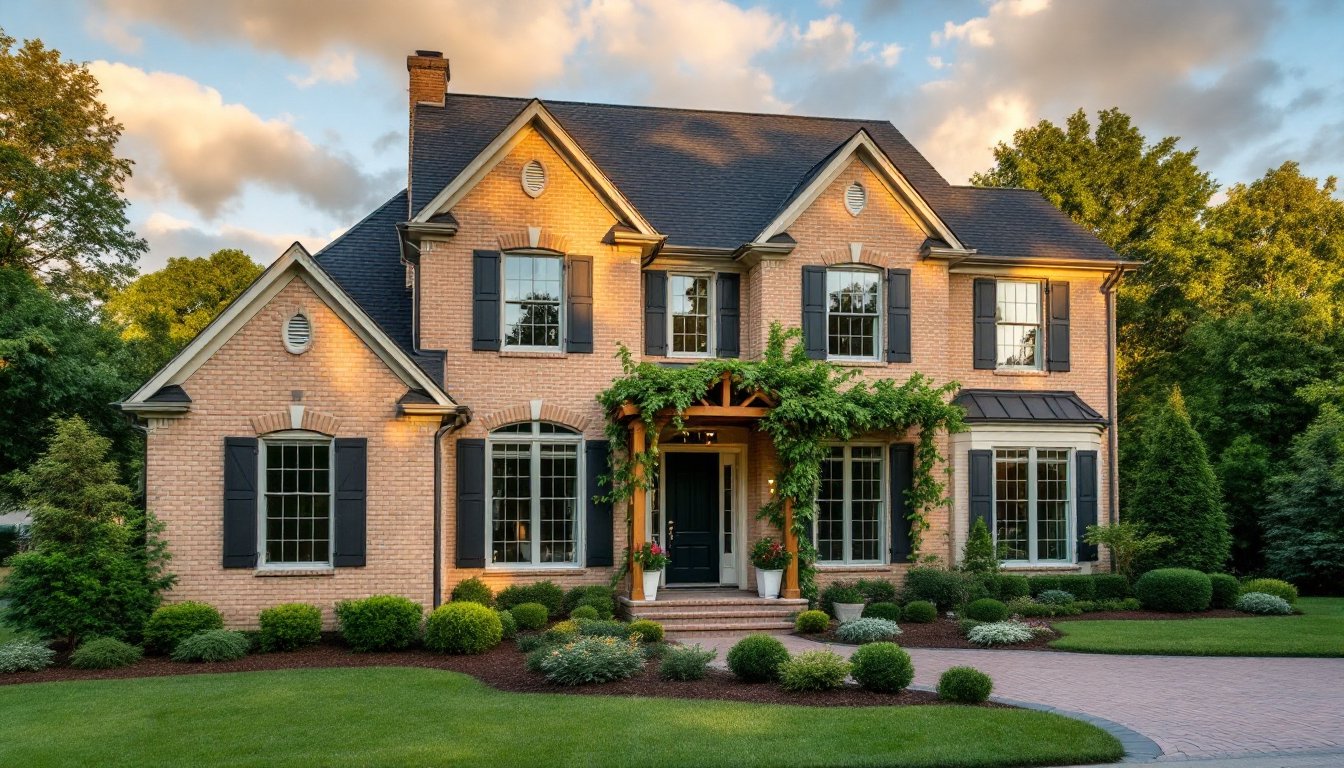
Another classic route marries blonde brick with a warm gray trim and brings in accent colors through landscaping and architectural details rather than painted surfaces. Stone or brick accents around the foundation, a timber or metal trellis with climbing vines, and planters in coordinated hues add richness without repainting every trim board. Heritage colors like colonial green, barn red, or deep bronze work when you’re honoring period architecture. If your home was built in a specific era, research color palettes from that period and adapt them to contemporary materials and finishes. Home Bunch’s design inspiration showcases luxury homes and new construction with classic color approaches applied thoughtfully, providing real-world examples of timeless schemes that integrate architecture, landscaping, and restraint.
Practical Tips for Choosing Your Color Scheme
Start by creating a mood board: gather images of homes with blonde brick and color combinations that resonate with you, noting which trim colors, accent shades, and material combinations appear across multiple inspirational homes. This pattern-spotting reveals what actually works, not what you’ve convinced yourself should work.
Test paint samples directly on large swatches of your actual brick. Carry samples outside at different times of day and photograph them. Colors render wildly different in your phone’s camera versus your eye, so view both. Buy sample-size paint cans (most big-box retailers offer this) and paint 2×2-foot test patches on inconspicuous trim or a garage corner. Live with the color for 3–5 days before committing.
Consider your landscaping and hardscape colors (mulch, stone pathways, driveway material) as part of the scheme. Cool-toned grays and blacks in your hardscape pair differently with blonde brick than warm taupes or reds. Coordinate, don’t clash.
Consult your HOA or local guidelines if applicable. Some neighborhoods restrict trim colors or require historical accuracy. Check before investing in paint and labor. If you’re painting shutters or siding, confirm you’re using exterior-grade paint with proper primers for your surface (wood, metal, or composite shutters require different prep and paint formulations).
Conclusion
Blonde brick’s warmth and neutrality make it an ideal base for experimenting with color schemes. Whether you’re drawn to soft creams, bold accents, modern minimalism, or timeless classics, your brick can support it. The key is testing before committing and respecting the brick’s natural undertones rather than fighting them. Start with a mood board, test samples, and take your time observing light conditions. A thoughtfully chosen color scheme transforms not just your home’s visual appeal but how you feel stepping outside each day.