Barn red has been a staple of American architecture for centuries, and for good reason. This warm, saturated hue evokes heritage, stability, and the natural beauty of the countryside, yet it works just as well in modern suburban and urban homes. Whether you’re looking to refresh your exterior or bring barn red indoors as an accent wall, the key is pairing it with complementary colors that amplify its character. In 2026, designers and homeowners are moving beyond single-color statements to create cohesive barn red color schemes that feel intentional and timeless. This guide walks you through seven proven palettes and shows you how to carry out them in your own space.
Table of Contents
ToggleKey Takeaways
- Barn red house color schemes have stood the test of time due to their versatility across architectural styles and their ability to evoke authenticity and craftsmanship.
- The classic barn red and cream combination remains the most timeless palette, using deep red as the primary color and soft, warm whites for trim and accents to prevent visual overwhelm.
- Pairing barn red with charcoal gray and black creates a modern, sophisticated look that removes rusticity and works especially well on contemporary farmhouses and urban homes.
- Barn red color schemes work beautifully with natural wood tones like cedar and weathered oak, enhancing rustic heritage appeal and creating depth in both interior and exterior applications.
- Successful barn red implementation requires quality exterior paint ($40–$60 per gallon), proper surface prep, two coats minimum, and testing large paint samples under your home’s actual lighting before committing.
- Interior barn red typically works best as an accent—one feature wall, cabinetry, or a front door—rather than covering entire rooms, preventing the color from feeling heavy or overwhelming.
What Makes Barn Red Such a Timeless Choice for Homes
Barn red isn’t just a color, it’s a signal. Historically, farmers painted their barns red because iron oxide, the main ingredient in red paint, was the cheapest and most durable option available. Over time, that practical choice became an icon. Today, barn red conveys authenticity, permanence, and a connection to craftsmanship.
What makes barn red work so well in residential design is its versatility. True barn red sits in the warm mid-tone range, think Sherwin-Williams Red Bay (SW 6321) or Benjamin Moore Caliente (AF-290), giving it enough warmth to feel inviting without veering into orange or pink. It’s bold enough to make a statement but grounded enough to pair with nearly any neutral. The color also weathers beautifully: as barn red exterior paint ages, it develops a softer, more muted patina that many homeowners find even more appealing than the fresh coat.
Barn red also works across architectural styles. Whether your home is a 1950s ranch, a Victorian farmhouse, a modern cottage, or a mid-century modern box, barn red adapts. It complements both traditional and contemporary design languages, which is why it remains a favorite among architects and renovation pros.
The Classic Barn Red and Cream Combination
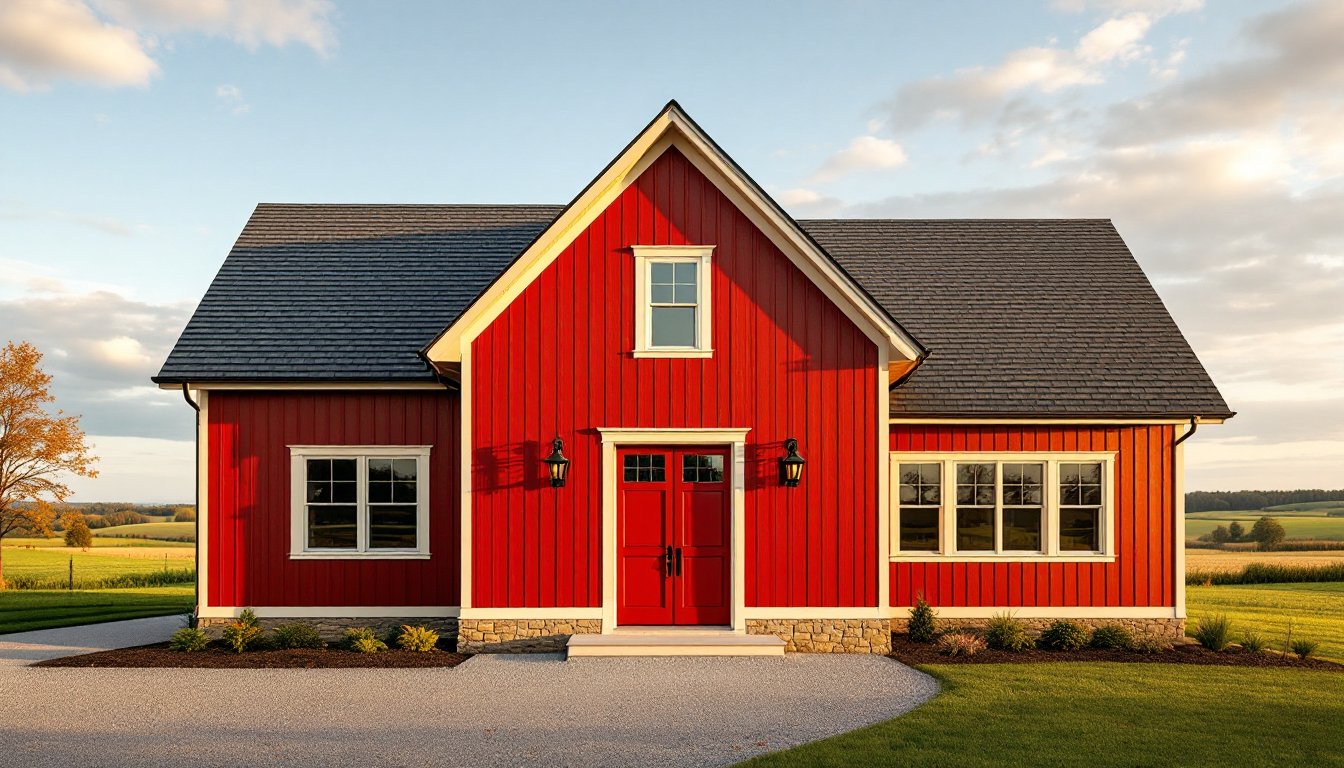
This is the palette that defined American barns, and it translates seamlessly to residential spaces. The contrast between deep barn red and soft cream or off-white creates visual interest without clashing. The cream acts as a cooling counterpoint that keeps the red from feeling overwhelming.
On exterior applications, barn red serves as the primary siding color while cream works for trim, doors, or shutters. Interior designers often flip this ratio: a barn red accent wall in cream-trimmed rooms, or red cabinetry in a cream-painted kitchen. The math is simple, if barn red is the bold statement, cream is the breathing room.
When selecting cream, avoid pure white, which can read as sterile alongside barn red. Instead, look for warm whites with slight beige or yellow undertones. Benjamin Moore Swiss Coffee (OC-45) and Sherwin-Williams Alabaster (SW 7008) both complement barn red naturally. For interiors, these creams feel softer and more inviting than stark bright whites, and they’re forgiving if your barn red needs touch-ups over time. Vintage barn-red and cream homes often used milk paint or linseed oil finishes, which are worth exploring if you’re aiming for authentic period restoration.
Modern Barn Red With Charcoal and Black Accents
Want barn red to feel contemporary? Pair it with charcoal gray and deep black. This palette removes the rusticity entirely and creates a sophisticated, high-contrast look that reads as urban and intentional. Charcoal grounds the scheme while black adds drama to trim, doors, or window frames.
This combination works especially well on modern farmhouses and contemporary homes with clean lines. A barn red front door with black steel framing and charcoal siding feels far different from the traditional red-and-white version, it’s bold without sentimentality. Interior applications also shine: a barn red accent wall in a living room with charcoal furniture and black metal shelving creates gallery-like sophistication.
The key is restraint. Limit black to architectural features, doorframes, gutters, metal railings, rather than large wall surfaces, which can feel heavy. Charcoal works better for larger areas like siding or interior wall paint. Benjamin Moore Iron Mountain (2134-40) provides a neutral charcoal that bridges barn red and black without leaning too gray. This palette suits homeowners who want barn red’s warmth but need modern visual weight.
Rustic Barn Red Paired With Natural Wood Tones
If you’re drawn to barn red for its heritage character, pairing it with exposed wood is the obvious move. Cedar, pine, reclaimed oak, and hemlock all enhance barn red’s rustic appeal. The combination evokes authentic farmhouses and rural cottages, spaces that aged naturally over decades.
This palette works best when wood remains visible and prominent. Exposed ceiling joists, wood siding, vertical shiplap, or unpainted barn doors all interact beautifully with barn red walls or trim. The wood doesn’t need to be pristine: in fact, weathered or hand-planed boards add authenticity. On exteriors, wood shingles or timber accents soften the boldness of barn red. Indoors, wood kitchen cabinetry against barn red walls creates warmth and depth.
The undertone matters here. Warm-toned woods (golden oak, honey pine, cedar) harmonize naturally with barn red. Cooler grays woods (weather-beaten reclaimed timber) create slight tension, which can be striking if used intentionally. Newer lumber tends to be lighter and less forgiving: weathered or stained wood reads more authentically. Don’t sand off patina, let the wood age. Modern finishes like exterior house colors featuring red accents with natural wood show how timber trims enhance rather than compete with bold wall colors.
Contemporary Barn Red and Gray Color Schemes
Gray is the neutral of the 2020s, and barn red pairs with it more thoughtfully than you might expect. The key is choosing the right gray, neither too cool nor too warm. A soft gray acts as a sophisticated mediator between barn red’s warmth and neutral interiors, perfect for homeowners who want barn red without full rustic commitment.
Use barn red strategically: one accent wall, a feature door, cabinetry, or exterior siding. Surround it with soft grays in walls, trim, or furnishings. Sherwin-Williams Urbane Bronze (SW 7048) or Benjamin Moore Sparrow (1563) both work, they’re gray enough to feel contemporary but warm enough to avoid the cool undertones that can clash with barn red.
This palette suits modern farmhouse, transitional, and Scandinavian-influenced designs. Indoors, barn red kitchen cabinetry against gray walls and white countertops feels curated and intentional. Exteriors benefit too: barn red board-and-batten siding with gray trim and charcoal metal accents reads as polished without pretension. Gray absorbs barn red’s boldness, making the overall effect calming rather than intense. Interior inspiration is everywhere, home design trends regularly feature barn red paired with cool grays in modern spaces, proving the combination isn’t nostalgic, it’s current.
How to Implement Barn Red Into Your Home Design
Choosing a barn red palette is one thing: executing it requires planning. Before opening a paint can, decide your commitment level. Is barn red the dominant color, or an accent? Will it live indoors or out, or both? The answers drive material selection and prep work.
For exterior applications, barn red performs best on quality exterior paint. Mineral-based paints (like those with iron oxide pigments) and traditional acrylic latex formulations both hold barn red color longer and resist fading better than cheaper products. Expect to pay $40–$60 per gallon for exterior paint that won’t fade noticeably in five years. Before painting, pressure-wash siding, repair caulk gaps, and sand rough spots. Barn red shows imperfections: smooth prep means better coverage and longevity. Two coats are standard for exterior work, one coat always looks thin on barn red.
For interiors, the stakes are lower. Interior barn red often works best as an accent, one wall, a kitchen island, cabinetry, or a door. Full-room barn red can feel heavy without careful lighting and proportioning. Paint rollers work fine for walls: a quality brush (synthetic bristle for latex paint) gives better trim definition than cheap brushes. Interior paint coverage is roughly 350–400 square feet per gallon, so measure wall area before buying.
Sample first. Paint large (2×3 foot minimum) sample patches and observe them at different times of day. Barn red shifts dramatically under artificial light versus daylight. Test on the wall you intend to paint, not a poster board. Let samples dry fully before judging, wet barn red looks darker and more orange than the dried finish.
Consider undertones when pairing trim. If your barn red leans slightly orange, pair it with creams that have yellow warmth rather than gray. If your red leans slightly toward burgundy, softer whites and cool grays work better. Most paint manufacturers list undertone info in spec sheets, use it.
Interior Walls and Accent Features
Indoors, barn red excels as an accent rather than a dominant wall color. A single feature wall in a bedroom, living room, or entryway creates focal-point drama without overwhelm. Paint the wall behind a bed, above a fireplace, or framing a bookcase, places where the eye naturally lands.
Barn red also works beautifully on kitchen or bathroom cabinetry. Cabinet paint is more durable than wall paint and showcases barn red’s warmth intimately. Pair it with white or light gray tile, open shelving in natural wood, or stainless steel appliances for contrast. Kitchen islands in barn red feel intentional and collected, not trendy.
Doors command attention. An exterior barn red front door signals identity and curb appeal. Interior barn red doors, whether closets, pantries, or bedrooms, add playful personality. Choose a flat or matte finish for doors: semi-gloss shows every fingerprint.
Don’t overlook trim and molding. Barn red baseboard, crown molding, or wainscoting creates unexpected richness, especially in period homes. This approach lets you enjoy barn red’s warmth while keeping walls neutral, a safer path for renters or those uncertain about commitment.
For walls, plan for two coats minimum. Barn red has strong pigmentation but still requires solid coverage. Use a quality primer if painting over dark existing colors or glossy finishes. Allow 24 hours between coats and 48 hours before furniture placement. Always test paint samples under your home’s actual lighting before committing to a full gallon, barn red’s warmth shifts under warm or cool artificial light, and daylight exposure changes the hue significantly.