Living in a tiny house or small apartment means making every square foot count, and laundry shouldn’t demand an entire room. A washer dryer combo is a practical solution for dwellers who can’t afford the real estate for separate appliances. These compact machines wash and dry clothes in a single unit, eliminating the need for a second appliance or multiple hookups. Whether you’re in a 400-square-foot studio, a shipping container home, or a downsized cottage, a washer dryer combo can handle your laundry without taking over your space. This guide covers what to look for, how to fit one into your tiny home, costs, and maintenance tips to keep your unit running smoothly for years.
Table of Contents
ToggleKey Takeaways
- A washer dryer combo solves the space challenge in tiny homes by combining both wash and dry functions in a single compact unit, freeing up valuable square footage for other uses.
- Expect wash-and-dry cycles to run 3–5 hours compared to 1–2 hours with separate machines, and plan for smaller load capacities (2–2.8 cubic feet) requiring more frequent laundry runs.
- Choose ventless drying models with moisture-sensing technology and WiFi connectivity to maximize efficiency and convenience—popular 2026 options from LG and Samsung range from $1,000–$1,500.
- Factor in total installation costs of $500–$1,600 beyond the appliance price, including potential plumbing, electrical, and permit expenses depending on your tiny home’s existing hookups.
- Maintain your washer dryer combo monthly by cleaning the gasket, running self-cleaning cycles, and using high-efficiency detergent to prevent mold, odors, and costly repairs down the road.
What Is A Washer Dryer Combo And Why It’s Perfect For Tiny Homes
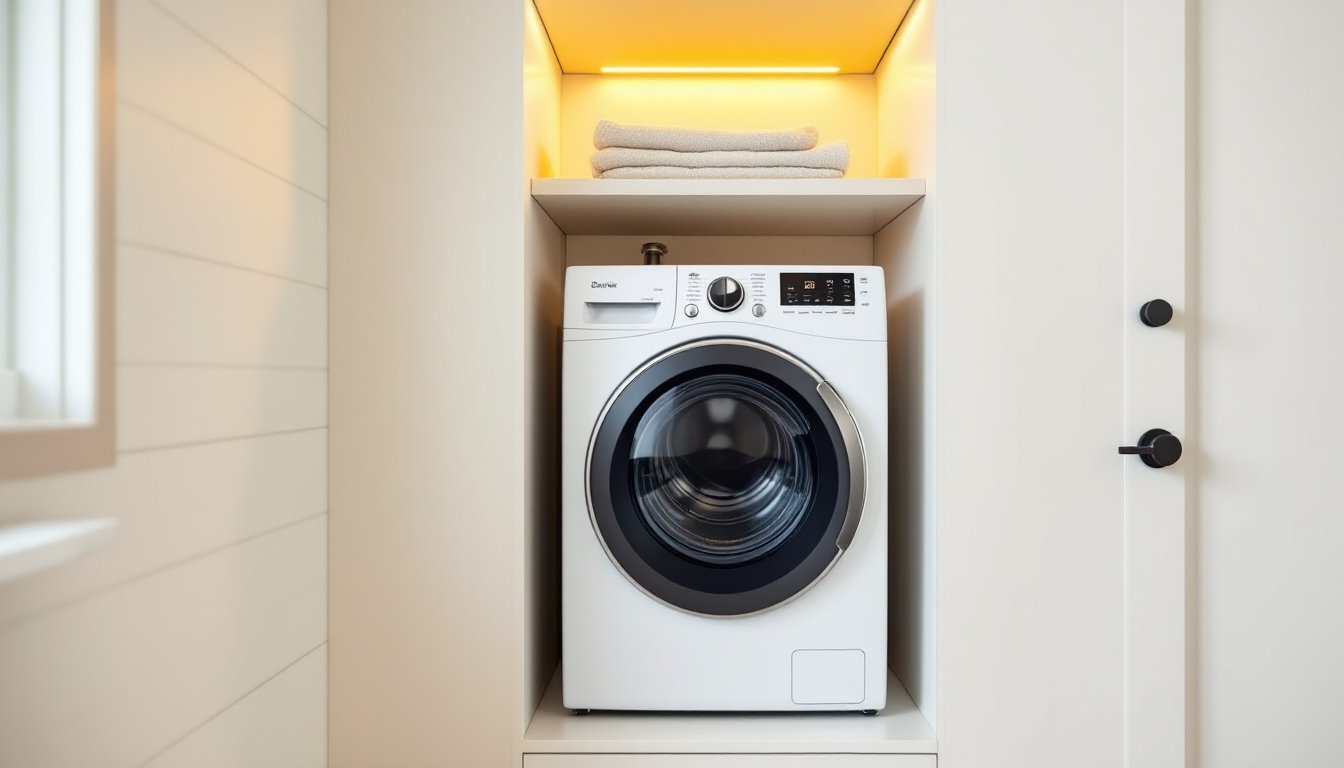
A washer dryer combo is a single appliance that handles both washing and drying in one cycle without requiring you to transfer clothes to a separate dryer. Most models are front-loaders around 27 inches wide, 39 inches tall, and 30–34 inches deep, roughly the footprint of a standard washing machine. The critical trade-off: combo units take significantly longer than separate machines. A typical wash-and-dry cycle runs 3–5 hours instead of the 1–2 hours you’d spend on separate appliances.
For tiny homes, the space savings are real. Instead of occupying two separate appliance footprints (or stacking a washer and dryer vertically with special equipment), you get laundry handled in one compact unit. This frees up floor or wall space for storage, living area, or a second closet. Combo units also require only one power outlet and a single hot/cold water line, which simplifies plumbing and electrical work, especially useful if you’re retrofitting laundry into a space that wasn’t originally designed for it.
The downside is capacity. Most combos hold 2–2.8 cubic feet, compared to 4–5 cubic feet for standard washers. That means smaller loads and more frequent laundry cycles if you have a family. Drying capacity also lags behind dedicated dryers, since the drum reuses the same space for both functions. If you live alone or with a partner and don’t mind running laundry twice a week, a combo is an excellent choice.
Top Washer Dryer Combo Models For Small Spaces
When shopping for a combo unit, focus on capacity, cycle time, energy efficiency (ENERGY STAR rating), and noise level. Front-load combos from established brands tend to be more reliable than top-loaders, though front-loaders cost more upfront.
Popular 2026 models include Samsung, GE, and LG offerings. According to recent testing, the best washer-dryer combos come from brands that prioritize ventless drying technology (heat pump or condensing models), which reduces energy use and doesn’t require external ductwork, a huge advantage in tiny homes where roof or wall venting might be impractical.
Look for units with moisture-sensing technology, which stops the drying cycle once clothes reach the target dryness level, reducing runtime and wear on fabrics. WiFi-connected models let you start or monitor loads from your phone, handy if laundry is in a separate room or shared utility area.
The LG WM4000CW and Samsung WF45R6100AW are solid mid-range options for tiny spaces, typically priced between $1,000–$1,500. If budget is tight, older models from previous years often cost $500–$800 used but may lack smart features. Don’t skip checking warranty coverage: combo units have more moving parts than single-function machines, so a 1-year parts-and-labor or extended 3-year warranty is worth the premium.
Installation And Space Requirements
Measuring Your Tiny Home Space
Before ordering, measure your intended installation spot three ways: width, height, and depth from the wall or fixture nearest the unit. Don’t forget overhead clearance if the combo goes under a cabinet or shelf, you’ll need at least 2–3 inches above the machine for vibration and steam release. For side clearance, allow 1 inch minimum on each side so you can slide the unit in and out for service.
Check doorways and hallways too. Many tiny homes have tight passages. A front-loader combo may fit through a standard 32-inch interior door (measuring the actual opening, not the frame), but only if you angle it. If your home’s layout forces the unit into a permanent dead-end, you’ll need installation crew access: this can be pricey.
Water hookups matter. Combo units require hot and cold inlet lines: if your space only has cold water, you’ll need to run hot water beforehand (doable but inefficient). Drainage is equally important, most combos need a standpipe at 24–36 inches high, which is standard laundry room plumbing. If you’re installing in a bedroom closet or under a kitchen sink, retrofitting drainage can cost $200–$400 in extra plumbing.
Electrical is straightforward: a standard 120-volt outlet works for most combos, though some larger units draw higher amperage and need a dedicated circuit. Check your breaker panel and unit specs before installation. If you’re unsure about circuit capacity, hire a licensed electrician to verify, this isn’t worth a fire risk.
Cost Considerations And Budget Planning
Washer dryer combos range from $700–$2,200 new. Entry-level models with basic cycles and no smart features hover around $800–$1,000. Mid-range units with WiFi, moisture sensing, and quieter operation run $1,200–$1,600. Premium models with advanced heat pump drying and extra capacity exceed $2,000.
When budgeting, factor in installation costs beyond the appliance itself. If hookups already exist and the space is accessible, expect $100–$300 for delivery and setup. If you need new plumbing, electrical work, or venting, add $400–$1,200 depending on distance from existing lines and local labor rates. In some cases, retrofitting a small space costs more per linear foot than adding laundry to a basement.
Energy and water use also matter long-term. Combos are generally 20–30% more efficient than older separate machines but use significantly more water per load than modern washing machines alone (about 40 gallons per cycle). Over 5 years, utility savings may be modest unless you compare to very old separate appliances.
Permits vary by jurisdiction. Some municipalities require a permit for appliance installation if plumbing or electrical changes are involved: others don’t. Check your local building department before you buy. Skipping permits can void warranties and create liability if something goes wrong. Small kitchen appliance solutions and other design resources often discuss integrated laundry planning for compact homes, offering inspiration for layout and product pairing.
Maintenance Tips To Extend Unit Lifespan
Combo units are robust if maintained properly. Clean the rubber gasket monthly by wiping it with a damp cloth and removing trapped lint or detergent buildup: mold loves those dark, damp edges and smells awful if ignored. Run the cleaning cycle (often called “Tub Clean” or “Self Clean”) monthly using a washer cleaner like Affresh or white vinegar: this prevents odor and buildup that can degrade seals and bearings.
Use high-efficiency (HE) detergent only, regular detergent creates excessive suds that can damage the electronic controls. A combo’s smaller tub means even small excess soap causes problems. Measure detergent carefully: you’ll use far less than you think.
Don’t overload. It’s tempting to cram in extra laundry to run fewer cycles, but overstuffing reduces wash quality, slows drying, and stresses the drum bearing. Fill the drum until clothes fit snugly with room to move: roughly 80% full is the sweet spot.
Leave the door open between cycles to allow air circulation inside the drum and around the gasket, which dramatically reduces mold and odor risk. If your tiny home has humidity issues, run a small dehumidifier nearby or crack a window during the drying phase.
Every 2–3 years, have a technician inspect the drain pump and hose for clogs or degradation. Replacing a clogged drain hose costs $150–$300 and is far cheaper than water damage in a tight space. Design-focused home remodel inspiration and similar resources also share real-world case studies of compact laundry setups and their long-term performance, helpful for understanding what works and what to avoid.
Keep your user manual and warranty documentation. Most manufacturer defects show up within 3–5 years, so don’t skip annual maintenance. A $50–$100 annual check-up prevents a $500+ emergency repair.
Conclusion
A washer dryer combo is a sensible, space-saving solution for tiny houses and small apartments when you understand its real-world trade-offs. Longer cycle times and smaller capacity are offset by the freedom to reclaim square footage and simplify plumbing and electrical work. Choose a model with ventless drying, moisture sensing, and a solid warranty: measure carefully: budget for installation and permits: and maintain it diligently. Done right, a combo unit earns its place in a compact home for years to come.