Choosing the right exterior paint color for a coastal beach house is more than aesthetic, it’s about honoring the setting, protecting your investment, and creating curb appeal that lasts. A beach house exterior faces relentless salt spray, UV exposure, and humidity, so color selection directly impacts both appearance and durability. Whether you’re drawn to crisp whites, serene ocean blues, or sandy warm neutrals, the right palette reflects the coastal landscape while withstanding harsh weather. This guide walks you through proven coastal paint colors, practical considerations for your specific environment, and maintenance strategies to keep your beach home looking fresh year-round.
Table of Contents
ToggleKey Takeaways
- Coastal beach house exterior paint colors must use marine-grade formulations with superior adhesion and UV protection to withstand salt spray, UV exposure, and humidity.
- Classic white, soft blue, and warm neutral tones are proven coastal paint colors that balance aesthetics with durability, with each offering distinct maintenance and energy efficiency benefits.
- Lighter colors reflect heat and lower cooling costs, while mid-tone and warm grays hide salt spray residue better, reducing how often you need to clean or repaint your beach home.
- Invest in 100% acrylic latex or premium urethane paint, apply two coats over quality primer, and prioritize thorough prep work including power washing and sanding to ensure 7–10 years of color longevity.
- Test paint swatches on all sides of your home and plan a three-color palette with accent trim and door colors to create depth and visual interest without looking dated or chaotic.
Why Coastal Paint Colors Matter for Your Beach Home
Coastal environments demand exterior finishes engineered for salt air corrosion, intense sun exposure, and temperature fluctuations. Generic paint simply won’t perform, you need marine-grade formulations with superior adhesion and UV protection. Beyond durability, your color choice affects the home’s perceived value, energy efficiency (lighter colors reflect heat), and how it integrates with the surrounding natural landscape. A well-chosen coastal palette can increase curb appeal and make the house feel intentional rather than weathered. Failing to plan your color scheme often leads to repainting within 3–5 years instead of 7–10, costing time and money.
Classic White and Cream: The Timeless Coastal Choice
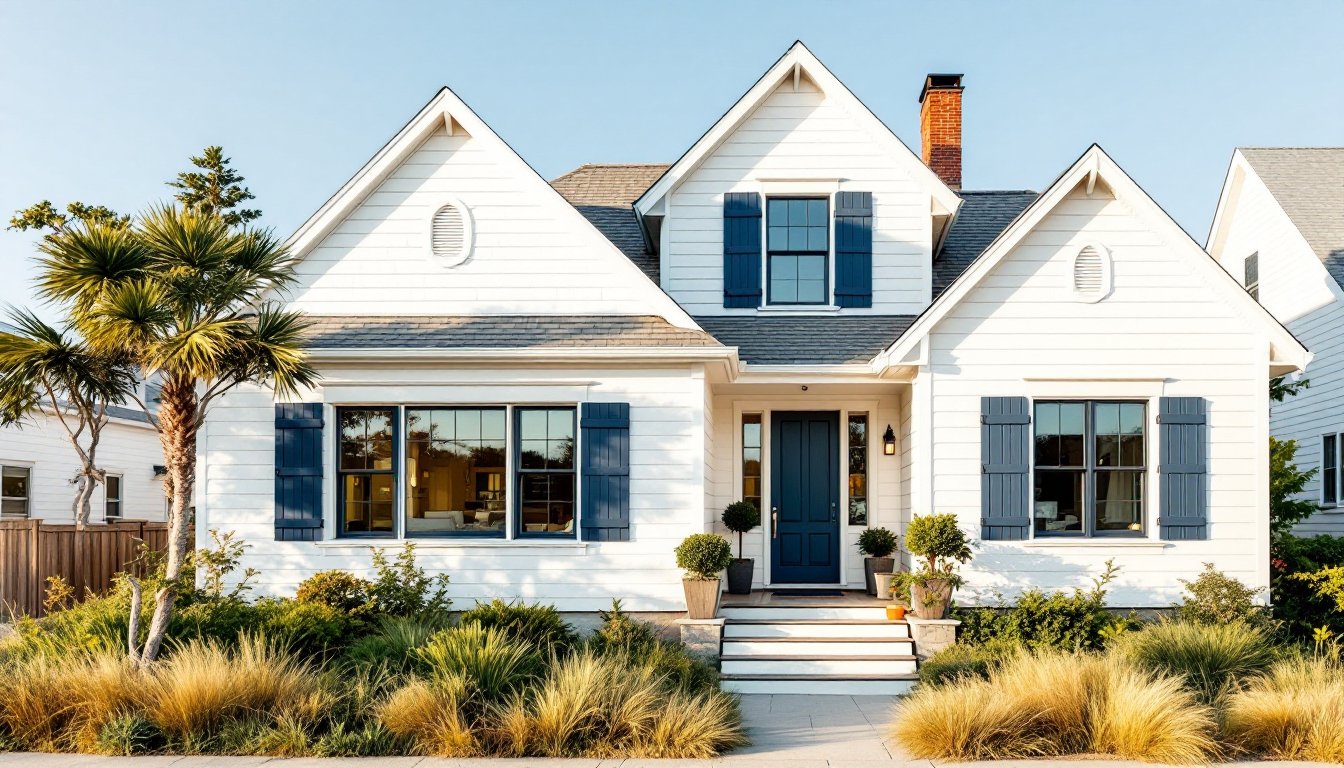
Bright white and soft cream remain the gold standard for beach house exteriors, and for good reason. They reflect sunlight, reducing heat absorption and lowering cooling costs, a real advantage in hot coastal climates. White also provides the cleanest backdrop for highlighting trim, shutters, or architectural details, and it photographs beautifully, a bonus if you’re listing the property. True white can feel stark: consider warm whites with slight undertones (ivory, cream, off-white) to soften the look. Brands like Sherwin-Williams’ SW 7005 Pure White or SW 6986 Accessible Beige offer reliable coastal performance. The trade-off: white shows dirt, salt spray residue, and mildew faster than darker colors, meaning you’ll rinse the exterior more frequently (typically annually or bi-annually in salt spray zones).
Soft Blues and Aquas: Capturing the Ocean Essence
Soft blues, from pale sky tones to muted seafoam, directly echo the ocean and sky, creating a cohesive coastal narrative. Unlike saturated or bold blues, these gentle hues remain timeless and won’t feel dated in ten years. Popular options include Sherwin-Williams’ SW 6247 Watery (a pale, almost-gray-blue) or SW 6226 Rainwashed (subtle blue-gray), both holding up well in salt environments. Aquas and pale teals offer slightly more personality while maintaining sophistication. The advantage: these colors hide minor wear and salt spray residue better than white, reducing maintenance frequency. Test swatches on your home’s north, south, and west-facing walls, lighting conditions drastically shift how blue reads throughout the day. A pale blue that glows on the sunny side may look washed out on the shaded side, so mock-up samples before committing.
Warm Neutrals and Sandy Tones for Relaxed Appeal
Soft tans, warm grays, and sand-inspired neutrals ground a beach home without the brightness of white or the boldness of blue. These colors evoke driftwood, sun-bleached shells, and natural coastal landscapes, making them feel inherently harmonious at the shore. Sherwin-Williams’ SW 7032 Rock Bottom (soft taupe) or SW 7065 Morning Fog (warm gray) deliver understated elegance. Warm neutrals work especially well for modern or minimalist beach homes, and they pair beautifully with natural wood trim or stone. They’re also forgiving, minor dust or salt spray is less visible than on white, yet they don’t feel as heavy or dated as some grays. The subtle nature of these colors means they require bold accent trim or landscaping to pop from the road, so plan your contrast strategy upfront.
Accent Colors and Trim Options That Enhance Coastal Character
Your main exterior color is just the foundation. Strategic accent colors, on trim, doors, shutters, or a single accent wall, define the home’s personality and draw the eye. Navy or charcoal doors stand out beautifully against cream or white siding, while teal-painted shutters add coastal punch without overwhelming the facade. Contrasting trim in white or soft gray frames the roofline and windows, creating visual interest. Many coastal homes use a three-color palette: main body color, a lighter or complementary trim, and one bold accent (like a front door). This approach, backed by 36 exterior house colors featured in design publications, ensures depth without chaos. Avoid trendy accent shades that peak in popularity, navy and charcoal are timeless, while hot pink or lime rarely age well. Test your trim color against your main color in full sun: what works in a paint chip may clash under daylight.
Practical Considerations: Weather, Durability, and Maintenance
Coastal paint selection hinges on practical durability, not just aesthetics. Always use 100% acrylic latex or premium urethane exterior paint rated for salt spray and UV protection, budget paints fail faster and cost more in repaints. Look for products labeled salt-spray tested or marine-grade: these have enhanced adhesion and mildew resistance. Application matters as much as paint choice: two coats over a quality primer ensure longevity. Prep work, power washing, filling cracks, sanding glossy surfaces, is non-negotiable: skipping it guarantees paint failure within 2–3 years. In high-salt-spray zones (within 500 feet of the ocean), plan to rinse your exterior annually with fresh water to remove salt buildup that accelerates degradation. Choose colors that minimize visible maintenance: white and pale blue need frequent cleaning: warm grays and mid-tone tans hide dirt longer. Your climate zone, humidity level, and proximity to saltwater all influence repainting intervals, expect 7–10 years in moderate zones, 5–7 in harsh salt spray areas. Consult your local building department on any exterior work: some jurisdictions have guidelines on beach house colors or require permits for certain changes.
Conclusion
Coastal beach house exterior colors thrive when they balance timeless appeal with environmental resilience. Whether you choose classic white, serene blue, or warm sandy tones, invest in marine-grade paint, prioritize meticulous prep, and accept that salt spray environments demand more frequent maintenance than inland homes. Your color palette should feel intentional, a reflection of the coastline, not random. Start with paint samples on all exposures, live with them for a few days, and commit to a plan that honors both your aesthetic vision and the realities of seaside living.