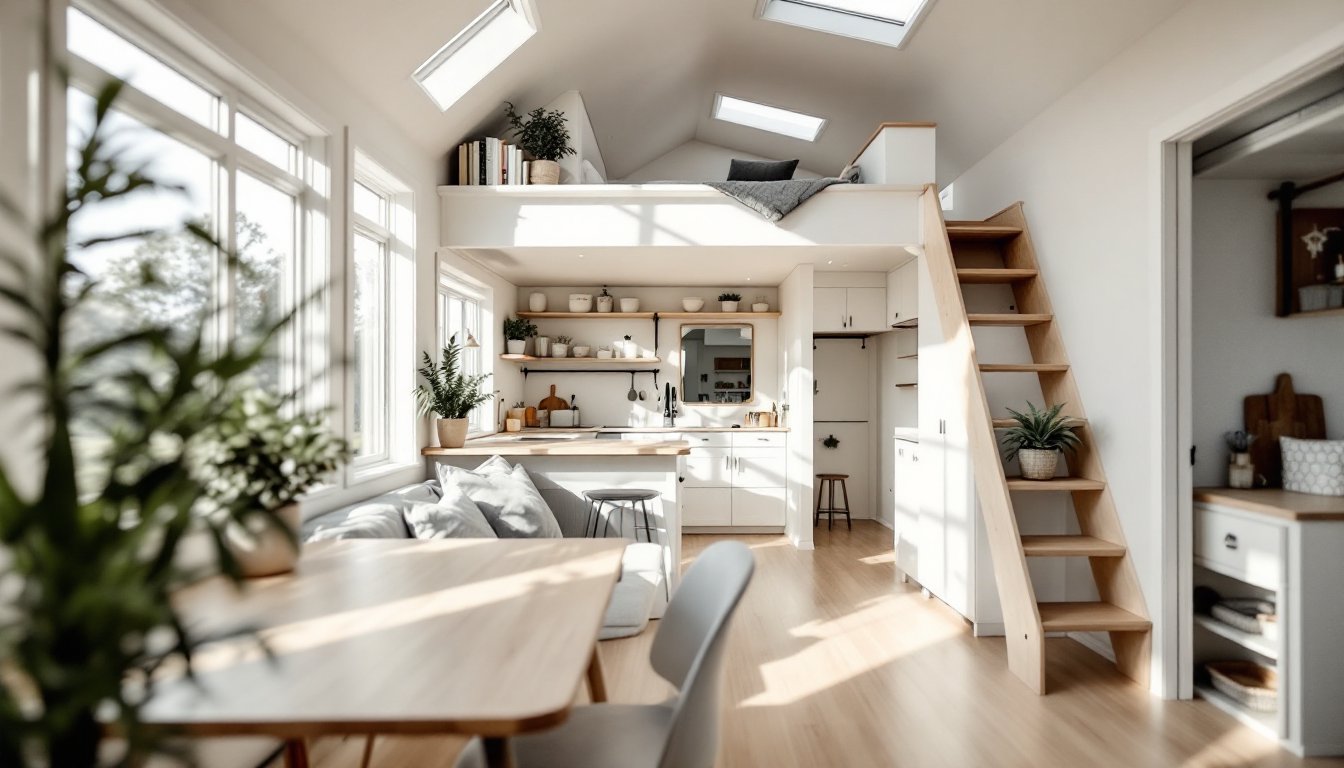
Tiny house living demands creative solutions for every square inch, and the bathroom is no exception. A composting toilet transforms what’s typically a water-hungry fixture into a self-contained, low-maintenance system that works without municipal sewage or septic tanks. For homeowners designing off-grid cabins, RV setups, or genuinely compact dwellings, composting toilets offer real freedom from infrastructure constraints. This guide walks through how they work, which models fit different spaces, and what installation and upkeep actually entail, so you can decide whether one belongs in your tiny home project.
Table of Contents
ToggleKey Takeaways
- A composting toilet for tiny houses eliminates the need for water hookups, septic systems, and sewer lines, making it ideal for off-grid cabins, RVs, and remote properties.
- Composting toilets use virtually no water compared to standard flush toilets that consume 3.5–7 gallons per flush, dramatically reducing your household’s water footprint.
- Proper maintenance requires adding a carbon bulking agent after each use, emptying the urine jug every 2–4 weeks for single occupants, and ensuring adequate ventilation through an external exhaust vent.
- Self-contained composting toilet units cost $500–$2,000 and require no plumbing, while central system toilets range from $3,000–$5,000+ but handle higher volume for full-time households.
- Temperature significantly impacts decomposition speed—composting toilets work faster in warm climates and slower in cold regions, with finished compost ready in 6 months to 2 years depending on conditions.
- Consistent carbon balance and proper airflow prevent odors and ensure pathogen-free compost suitable for ornamental plants and landscaping, though local regulations should be checked before use.
Why Composting Toilets Make Sense For Tiny House Living
A composting toilet eliminates the need for water hookups, septic systems, or sewer lines. That’s huge when square footage and utility access are tight. They’re especially practical for off-grid locations, RVs, boats, and remote cabins where conventional plumbing isn’t an option or costs a fortune to install.
Beyond convenience, composting toilets reduce your household’s water footprint dramatically. A standard flush toilet uses 3.5 to 7 gallons per flush: a composting unit uses virtually none. For tiny houses built on sustainability principles, that alignment matters. You’re also generating compost, a byproduct useful for non-food landscaping, instead of sending waste into treatment systems.
There’s a practical side too. No pumping, no septic tank maintenance, no clogged lines. Once you understand the system, upkeep is straightforward. Monthly or quarterly maintenance, depending on use and model, keeps everything balanced. It’s predictable, low-cost ongoing care.
How Composting Toilets Work
The Basic Decomposition Process
A composting toilet separates solid waste from urine in a controlled environment where microbes and fungi naturally break down organic matter. The solid waste drops into a chamber containing a carbon-rich bulking agent, usually coconut husk, peat, or sawdust, which absorbs moisture and accelerates decomposition.
Liquids (urine) drain into a separate tank or, in some models, a gray-water line. This separation is key: it prevents the pile from becoming waterlogged and anaerobic (oxygen-starved), which would slow decomposition and create odors. Air circulation within the solids chamber, either passive or fan-assisted, keeps the process aerobic.
Over weeks to months, depending on temperature, moisture, and carbon-to-nitrogen ratio, solids decompose into a dark, crumbly, earthy material. It won’t look or smell like fresh waste after a few months of proper maintenance. The result is pathogen-free (at proper temperatures) and can be used on ornamental plants and landscaping, though local regulations vary on application, so check before spreading it.
Temperature matters. Composting accelerates in warm climates and slows in cold ones. A composting toilet in a heated tiny house in the Northeast will work, but decomposition takes longer than one in a sunny cabin in the Southwest.
Choosing The Right Composting Toilet For Your Space
Popular Models And Features To Consider
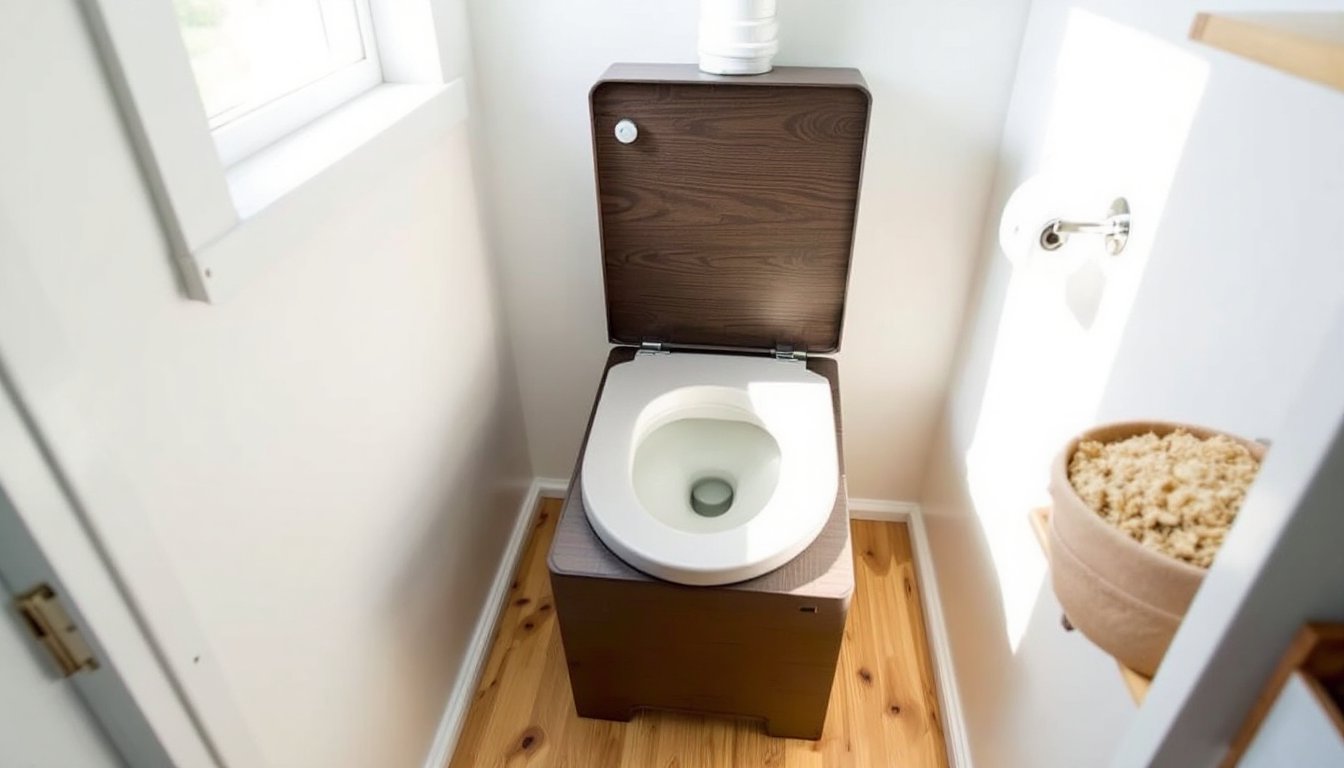
Composting toilets vary by size, mechanism, and whether they use electricity. A dry, self-contained unit (like a Nature’s Head or Thetford Porta Potti equivalents) sits standalone, has no external plumbing, and fits tight bathrooms. These typically run 20–24 inches wide and are ideal for RVs and truly minimal spaces. No electricity required: they rely on gravity and manual mixing or turning.
Central system toilets use a larger composting chamber located below or outside the bathroom. Waste drops through a chute from a regular-looking toilet seat into the central bin. These handle higher volume and are better for full-time households but need floor space or a basement. They often include a small 12-volt fan to improve air circulation.
Key features to compare: urine capacity (how often you need to empty the liquid tank), compost chamber size (how frequently you remove finished material), whether the unit is gravity-fed or uses a fan, noise level, and footprint. A single occupant might empty a 20-liter urine jug quarterly: a family of four might need 50+ liters and weekly dumps.
Cost ranges from $500 to $2,000+ for basic self-contained units, and $3,000 to $5,000+ for full central systems with installation. Look at reviews specific to your climate and occupancy: a model praised by two people in a cabin in Vermont may underperform in a humid Florida RV.
Installation And Maintenance Essentials
Installation is straightforward for self-contained units: unbox, place on a firm, level surface (a bathroom floor or utility closet), and you’re done. No plumbing or structural changes needed. Central system toilets demand a bit more: a dedicated composting chamber, often installed in a basement or under a raised floor, and a sloped chute from the toilet to the chamber. Gravity does the work, but install per manufacturer specs, improper slope leads to clogs.
Ventilation is critical. Your unit needs an exhaust vent piped outside, typically 3- to 4-inch PVC terminating above the roofline. This removes moisture and odor. A small 12-volt fan (powered by solar or household power) boosts air circulation: many owners find it worth the modest energy cost. Vent placement matters: run it away from windows and intakes so neighbors don’t smell your bathroom.
Maintenance is the opposite of complicated: Add a carbon bulking agent (dried leaves, sawdust, or commercial products) after each use, a small scoop. This balances moisture and fastens decomposition. Empty the urine jug when full (roughly every 2–4 weeks for one person, weekly for a family). When the solids chamber is three-quarters full, stop using it and let it sit. Finished compost is ready in 6 months to 2 years depending on temperature and design.
Wear nitrile gloves and a dust mask when handling bulking agent and emptying tanks. Never mix food scraps or pet waste into the chamber: they’re not part of the design and disrupt balance. Detailed composting guidelines provide step-by-step protocols if you’re new to the process.
Clean hard surfaces (seat, lid, under-rim) with vinegar or mild cleaners, just like a standard toilet. The unit itself rarely stinks if you add carbon consistently and maintain airflow. A slight earthy smell is normal: rotting-garbage odor signals incomplete decomposition or insufficient carbon, add more bulking agent and check your vent.
Conclusion
A composting toilet isn’t a trendy accessory, it’s a practical utility that aligns with tiny house constraints and off-grid living. If you’re building, renovating, or outfitting a compact space without sewer access, the math is clear: no water, no septic, low maintenance. Performance depends on choosing a model suited to your occupancy and climate, installing ventilation properly, and maintaining carbon balance through consistent use. For tiny house owners who value autonomy and sustainability, it’s a logical choice worth exploring.