Tiny house living isn’t about sacrificing comfort, it’s about designing with intention. Whether you’re downsizing, embracing minimalism, or working with a tight budget, the layout of your small space can mean the difference between feeling cramped and genuinely functional. The key lies in understanding how to stack vertical space, eliminate wasted square footage, and choose furniture that earns its footprint. This guide walks through proven layout strategies that let homeowners and DIY enthusiasts design a tiny house that actually works for how they live, without relying on gimmicks or Pinterest aesthetics that don’t hold up in practice.
Table of Contents
ToggleKey Takeaways
- Effective tiny house layouts prioritize traffic flow, create distinct zones without walls, and maximize natural light to avoid a cramped feeling.
- Sleeping lofts reclaim overhead space and double your living area, but require proper headroom (7 feet 6 inches minimum), adequate ventilation, and thoughtful access solutions like staircases.
- Multi-functional furniture and vertical storage are essential in tiny houses—storage beds, wall-mounted desks, and floor-to-ceiling shelving keep the floor clear and sightlines open.
- Kitchen and bathroom efficiency demands compact layouts (work triangle principle for kitchens, 5×8 feet or smaller for bathrooms) and strategic storage above and below counters.
- Privacy in tiny house layouts can be achieved through sliding doors, curtains, half-height walls, and thoughtful zoning that separates private functions (sleeping, showering) from public areas (cooking, living).
- Tiny house design succeeds by combining intentional layout principles—strategic furniture placement, area rugs, flooring changes, and color shifts—rather than relying on gimmicks or impractical aesthetics.
Understanding Tiny House Layout Principles
Before sketching a floor plan, grasp the fundamentals that separate functional tiny homes from cramped cubbies. The best layouts follow a few core rules: prioritize traffic flow, create distinct zones even without walls, and ensure natural light reaches every corner.
Flow matters most. When you’re living in 400 square feet or less, moving through the space should feel intuitive, not like navigating an obstacle course. Ideally, the entry doesn’t open directly into the kitchen or bedroom, and the main living area connects logically to sleeping quarters and utilities. Cramped layouts fail when the designer forgets that people move through houses in patterns, cooking, showering, sleeping, relaxing, not in a single spot.
Zoning creates psychological separation without partitions. A tiny house with poor zoning feels like one undifferentiated box. The living area should feel distinct from the sleeping loft, and the kitchen should feel like its own corner. This doesn’t require walls: it can be achieved through furniture placement, flooring changes (wood in the main living area, tile in the kitchen), ceiling height variations, or even color shifts. Psychology matters: your brain feels less cramped when it perceives distinct functional areas.
Natural light and ventilation prevent the “cave” feeling. Windows should be distributed across the floor plan, not bunched on one wall. Corner windows, skylights, and strategic placement of fenestration let daylight reach areas that would otherwise feel dark and isolated. Before locking in a layout, consider sun angles and how light moves through the space at different times of day.
The Loft Bedroom Layout: Doubling Your Living Space
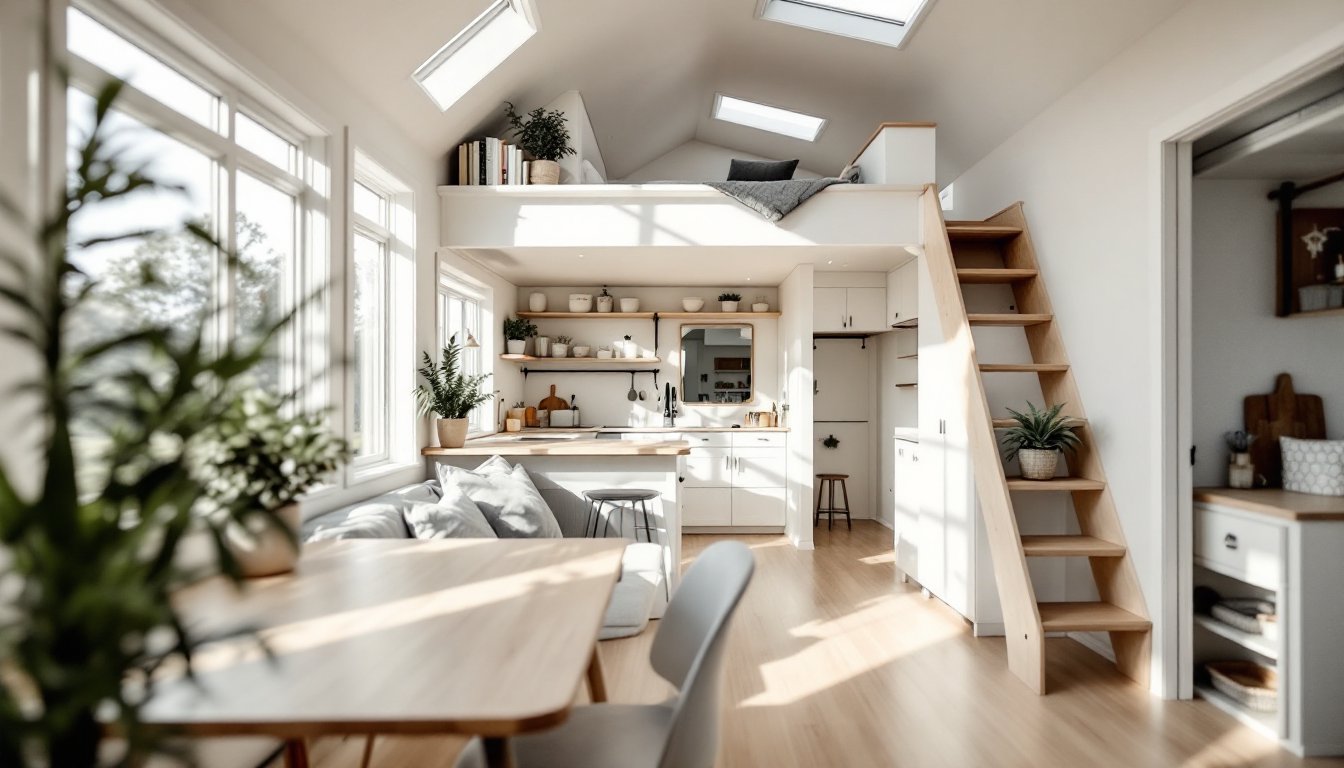
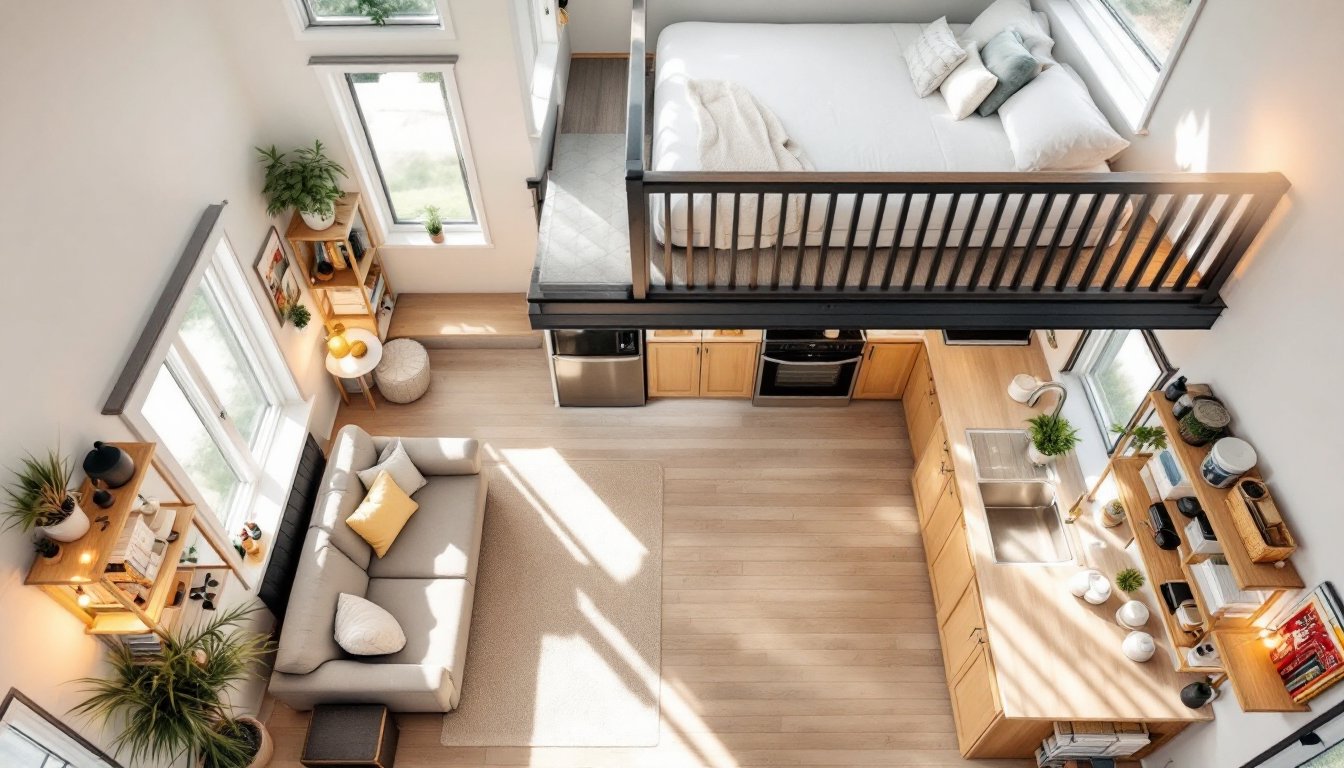
Sleeping lofts are the workhorse of tiny house design, they reclaim overhead space that ground-level bedrooms would waste. A well-designed loft keeps the main living area feeling open while providing a separate, private sleeping zone.
Standard loft sizing runs 4 by 8 feet or 5 by 12 feet, depending on the tiny house footprint and ceiling height. Most building codes require a minimum of 7 feet 6 inches of clear headroom for habitable lofts (check your local IRC or building department: codes vary by jurisdiction). The floor joists should be sized for residential live load (40 psf) and built from 2×10 or 2×12 lumber to span the width without excessive bounce. Undersize the joists, and the loft will flex and creak under weight, making it feel less solid.
Loft access is critical. A steep ladder is standard, but it eats space and can be awkward. A staircase with shallow steps (a run of 10–12 inches and rise of 7–8 inches) is more practical if you have 3–4 feet of floor depth to spare. Some builders install a corner staircase that doubles as a bookshelf or storage cabinet underneath, maximizing efficiency.
Ventilation and temperature control are often overlooked. Sleeping lofts can become hot boxes in summer and cold traps in winter because heat rises and dead air sits in the peak. Consider adding a small exhaust vent or operable skylight above the loft, and ensure return air pathways allow cooler air to circulate back down. A ceiling fan in the main living area also helps stratify temperature.
Open-Plan Designs for Small Square Footage
Open-plan layouts are the default for tiny houses because walls waste space and block sightlines. The trick is preventing the space from feeling chaotic or cooking-smell-adjacent to sleeping.
The kitchen-living-dining triptych works well in tiny homes. Rather than a closed-off galley kitchen, integrate it visually with the living area but use countertop height, a breakfast bar, or a subtle shift in flooring to define boundaries. A 36-inch-high eating counter with stools on one side creates a visual buffer without a wall, lets light pass through, and serves double duty as prep space and a dining surface.
Zoning without partitions saves precious square footage. Place the sofa perpendicular to the kitchen, not facing it, so the seating area feels intentional and separate. Use area rugs to anchor distinct zones, a rug under the dining table signals “eating area,” while a different rug under the living furniture creates a separate lounge zone. The eye follows these visual cues even without physical barriers.
Built-in seating and storage along walls maximize utility while maintaining openness. A bench with cubbies underneath the windows creates seating, storage, and a visual anchor. Shelving above the sofa holds books and décor without requiring floor space. In house hacking examples, owners often build custom wall shelving to replace freestanding furniture, keeping the floor clear and the sightlines open. Floating shelves feel lighter than closed cabinets, which can make a small space feel claustrophobic.
Multi-Functional Furniture and Storage Solutions
In a tiny house, every piece of furniture must justify its existence. Multi-purpose pieces aren’t optional luxuries, they’re foundational to making the layout work.
Storage beds are non-negotiable. A platform bed with deep drawers underneath (designed for items you access 2–3 times per year) reclaims 20–30 cubic feet that would otherwise go unused. Some tiny houses use hydraulic or gas-strut beds that fold up into the wall, though these tend to be pricier and add complexity. A simpler approach: a bed frame with storage cubbies on three sides, so nightstands, a small bookshelf, and a clothing cabinet are built in.
Ottomans and benches with hidden interiors serve multiple roles. One piece becomes seating, a footrest, a coffee table, and a storage trunk. Choose one with a removable cushioned top, and you get flexibility without multiple items cluttering the floor.
Wall-mounted folding desks or drop-down tables appear only when needed, then fold flat to reclaim space. A 30-inch-wide by 18-inch-deep desk mounted at 30 inches above the floor fits a laptop and notepad without dominating the living area. IKEA hacks, small wall-mounted shelves, fold-down tables, and modular systems, are popular in tiny houses because they’re affordable and designed for compact living. Tiny house builders often use IKEA products specifically for their space-efficient designs.
Vertical storage is your best friend. Install shelving from floor to ceiling along blank walls. Use the top shelves for seasonal items or décor, middle shelves for books and everyday items, and lower shelves for heavier things. This approach turns dead wall space into functional storage without eating floor area.
Kitchen and Bathroom Efficiency in Compact Homes
Kitchens and bathrooms take up disproportionate square footage in tiny houses, so every inch counts. Inefficient layouts in these rooms create cascading problems.
Tiny kitchens thrive on the work triangle principle: sink, stove, and refrigerator should form a compact triangle with no leg longer than 7 feet. In a 100-square-foot kitchen (common in tiny homes), this often means arranging appliances along one wall in an L-shape or galley layout. Undersized appliances help, a 30-inch refrigerator instead of 36 inches, a 24-inch range instead of 30 inches, but ensure they still meet your cooking needs. A residential kitchen design approach focuses on workflow, not just aesthetics.
Storage above and below counters prevents clutter on the work surface. Open shelving looks clean but requires discipline: closed cabinetry or a mix of open and closed works better in practice. Drawers are preferable to cabinets because you see everything inside and can access items without squatting.
Bathrooms in tiny houses are often 5 by 8 feet or smaller. A corner sink (24 inches wide) frees space compared to a standard 30-inch vanity. An open-front toilet (the tank doesn’t sit against the wall) saves a few inches. Shower stalls can be 30 by 30 inches in codes that allow it, though 36 by 36 inches is more livable. A hinged shower door takes less space than a sliding door that needs a track.
Ventilation is critical in compact bathrooms. A 80 CFM exhaust fan minimum (per IRC) prevents moisture buildup in an unventilated closet. Ductless exhaust vents are better than nothing but less effective than ducted fans venting outside.
Creating Privacy Without Walls
Living in a tiny house means sharing one open space, which challenges privacy. Smart use of sliding doors, curtains, and visual barriers preserves sanity without wasting square footage.
Sliding barn doors or pocket doors replace swinging doors that eat floor space. A sliding door to a sleeping loft or separate bedroom can be opened fully when you want an open feel, then closed for privacy or thermal separation. Pocket doors slide into the wall cavity, taking zero floor space when open, a 2-foot-wide pocket door needs only a 2-foot-wide wall cavity, unlike a swinging door that requires a 3-foot radius to open.
Curtains and fabric panels are underrated privacy tools. Heavy blackout curtains around a loft or sleeping alcove block sightlines and light, signaling “private space.” A curtain rod mounted in a corner creates a semi-private zone without requiring drywall or framing. The fabric can be drawn when someone is sleeping, then tied back during the day.
Half-height walls or railings define space while preserving sightlines. A railing around a loft keeps people safe, but it’s open at eye level when standing, so the main living area still feels connected and open. Some builders add a half-height wall (4 feet) between the kitchen and living area, which blocks cooking smells and sightlines without blocking light or making the space feel partitioned.
Appliances and utilities create implicit privacy too. A bathroom door and a separated bedroom loft provide private zones where people can close a door. If the layout groups all “private” functions (sleeping, showering, using the toilet) in one area and all “public” functions (cooking, living, working) in another, the tiny house feels more livable even though the compact footprint. House hacking tips emphasize this zoning principle to make shared or small spaces feel comfortable for multiple occupants.
Conclusion
A well-designed tiny house layout prioritizes flow, creates distinct zones without walls, and leverages vertical space and multi-functional furniture. The best layouts feel intentional and functional, not like an afterthought. Start by sketching zones, ensuring natural light reaches every corner, and sizing major elements (lofts, stairs, built-ins) to fit your lifestyle. With thoughtful planning and honest assessment of what you actually need, a tiny house becomes not a compromise, but a genuinely comfortable home.