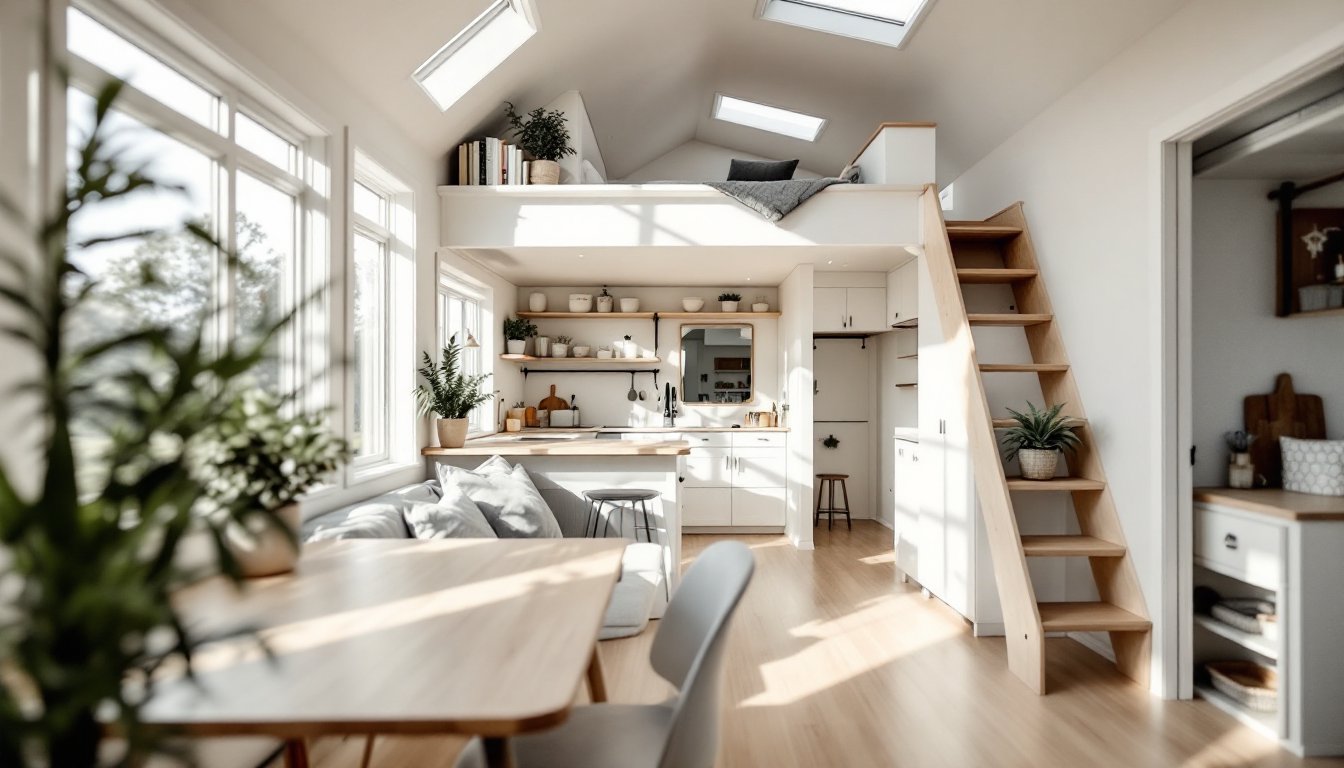
Tiny house living has moved beyond Pinterest dreams and into real North Carolina neighborhoods. Whether you’re drawn to lower utility bills, simpler maintenance, or a tighter community feel, tiny house communities across NC offer a practical alternative to traditional suburban sprawl. This guide walks you through what these communities actually are, where to find them in North Carolina, and whether joining one makes sense for your lifestyle and budget.
Table of Contents
ToggleKey Takeaways
- Tiny house communities in NC offer 30–50% savings on purchase prices and substantially lower utility bills compared to traditional homes, with monthly heating or cooling costs often running $40–80 for efficient homes.
- North Carolina’s tiny house communities span three geographic regions—mountain areas (Asheville, Black Mountain), piedmont zones (Charlotte, Durham, Chapel Hill), and coastal locations—each with distinct climates, job markets, and property costs.
- Purchasing a tiny house typically costs $80k–$180k in NC communities, with financing available through FHA, conventional, and VA loans, though appraisals can be challenging due to limited comparable sales.
- Tiny house communities prioritize walkability, shared amenities like tool libraries and gardens, and intentional neighbor interaction, which many residents cite as a greater benefit than financial savings alone.
- Tiny house living requires honest self-assessment: it’s not suitable for families needing multiple bedrooms, people with extensive collections, those seeking privacy, or those unwilling to engage in community governance.
- Before committing to a tiny house community in NC, verify local zoning compliance, visit 2–3 communities in person, and speak with current residents about resale experiences and maintenance challenges.
What Are Tiny House Communities?
A tiny house community is a planned neighborhood where most dwellings are significantly smaller than the American average, typically 400 to 800 square feet, rather than the median 2,200-square-foot single-family home. These aren’t RV parks or trailer lots: they’re permanent residential communities with deed restrictions, shared governance, and often shared amenities.
Residents own their homes outright or finance them like traditional mortgages, but they rent or own the land beneath (usually through a homeowners’ association or HOA). Some communities operate on a cooperative model where residents have a stake in the whole development.
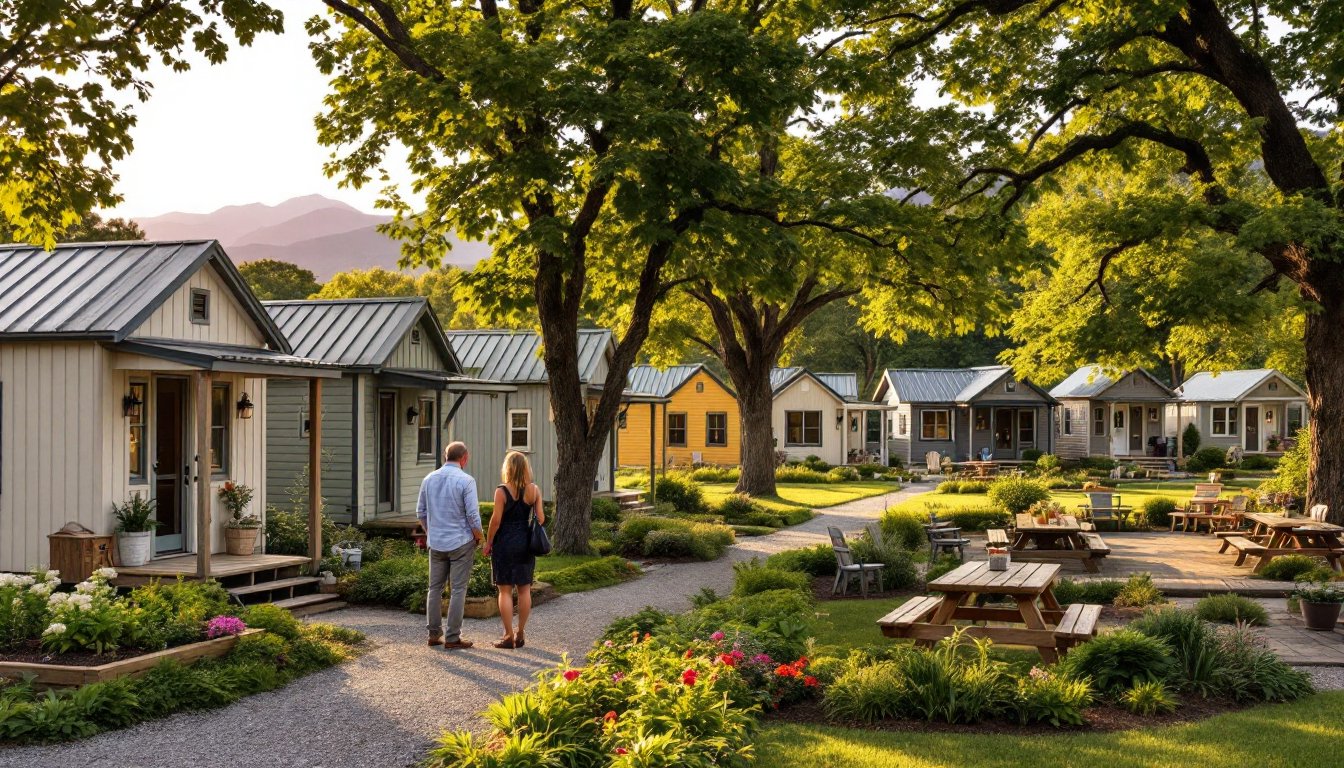
The key difference from a conventional subdivision is density and intentionality. Tiny house communities are built from the ground up with walkability, shared green space, and community engagement in mind. Common areas might include tool libraries, gardens, gathering spaces, and parking clustered at the edge rather than scattered throughout. This design both reduces land waste and encourages neighbors to actually interact, not everyone’s cup of tea, but intentional for those seeking it.
Top Tiny House Communities in North Carolina
North Carolina has several established tiny house communities and more in development, concentrated in three geographic zones. Each region offers different tradeoffs: mountain communities favor cooler climates and scenery, while piedmont and coastal options trade those for job markets and accessibility.
Mountain Region Communities
The Blue Ridge foothills and western mountains host some of NC’s most developed tiny house projects. These communities attract retirees, remote workers, and nature enthusiasts. Asheville’s booming alternative housing market includes established tiny house clusters, though land prices there have climbed steeply in recent years. Communities like OutRiverside (near Black Mountain) and developments around Fairview prioritize walkability and mountain access.
Mountain communities typically feature 400–600 square foot homes on 0.1–0.25 acre lots. Cool summers mean lower AC loads, but heating costs and property taxes vary by county. Western NC counties (Buncombe, Henderson, Madison) have welcomed tiny house zoning more openly than some piedmont areas, though you’ll want to confirm local code compliance before committing. Road access and snow removal can also factor into winter planning.
Piedmont and Coastal Options
The Piedmont, roughly Charlotte to Raleigh to Greensboro, offers proximity to jobs and urban services. Developments around Durham, Chapel Hill, and Charlotte’s inner suburbs are emerging, though fewer are fully operational than in the mountains. These communities lean younger, with mixed-income models and walkable-to-transit designs.
Coastal tiny house communities are less common but growing. Wilmington and outer Outer Banks areas have seen pilot projects, though hurricane resilience and flood insurance are real considerations, your insurance costs and elevation requirements will depend on FEMA flood zone mapping.
Piedmont and coastal communities typically range 500–800 square feet on smaller lots (0.05–0.15 acres). Humidity, cooling needs, and shorter winters affect utility bills differently than mountain living. Job proximity and urban walkability are major draws here, though land costs in desirable neighborhoods can rival or exceed mountain communities.
Benefits of Joining a Tiny House Community
Lower housing costs are the headline, but the real value proposition goes deeper. Most tiny house residents report 30–50% savings on mortgage or purchase price compared to a traditional home in the same region. Utility bills drop substantially: a 600-square-foot home with efficient HVAC and modern insulation often runs $40–80/month in heating or cooling, versus $100–180+ for a standard home.
Maintenance is genuinely lighter. Smaller roofs, fewer gutters, less exterior siding, and compact yards mean less repair, replacement, and upkeep. For aging homeowners or busy professionals, that relief is real. Recent home design news and urban living trends show tiny houses are attracting people prioritizing time over square footage.
Community is baked in. Shared gardens, tool libraries, and gathering spaces create natural interaction, no forced HOA mixers needed. Many residents cite this as the biggest non-financial win. You know your neighbors because you see them daily, and childcare, skill-sharing, and social support often follow naturally.
Lower environmental footprint appeals to many. Less heating, cooling, and resource consumption per capita is straightforward math. For those committed to sustainability, it aligns actions and values.
Flexibility is often underrated. If your life changes, job, health, family size, selling a $150k tiny home is more feasible than a $400k traditional house. Resale markets for tiny homes are maturing, though they remain thinner than conventional housing.
Costs, Financing, and What to Expect
Purchase prices for new tiny homes in NC communities range widely: $80k–$180k depending on finishes, location, and land ownership model. Mountain communities tend toward the higher end: emerging piedmont and coastal projects may offer lower entry points.
Land rent (if you don’t own the land) typically runs $200–$400/month, covering HOA, maintenance, and common area upkeep. Some communities use a land lease model: others sell land outright. Clarify this upfront, it affects long-term costs and resale value.
Financing is the stickler. Most traditional lenders will mortgage a tiny house under $150k without fuss, but homes in the $100k–$180k range sometimes hit underwriting friction. FHA loans work, as do conventional and VA loans (if eligible). You’ll need 3–5% down minimum for conventional, potentially more for FHA. Interest rates are standard, but appraisals can be tricky, some appraisers still undervalue tiny homes because comps are sparse.
Utility costs depend on climate and efficiency. Piedmont communities running $60–120/month utilities: mountain communities might see $80–150/month (seasonal swings are larger). Water, sewer, and trash are typically included in HOA fees or separate but modest.
Property taxes vary by county. NC’s effective rate ranges 0.74% (lowest in Burke County) to over 1% (in some piedmont counties). A $120k home in a 0.9% county costs roughly $1,080/year. Ask the community for their county’s rate and sample tax bills.
Budget $3k–$8k for closing costs, inspections, and moving. A second pair of hands or modest professional help for utilities hookup is worth the $500–$1,500 investment, tiny homes have compact systems, and mistakes are costly.
Is a Tiny House Community Right for You?
This isn’t for everyone, and that’s honest, not cynical. Ask yourself: Do you have kids who’ll need separate bedrooms? (Most tiny homes have one or two bedrooms max, and 600 sq ft gets tight fast with a family.) Do you work from home and need dedicated office space? (Possible, but a 120-sq-ft bedroom doubles as desk: it’s doable but not spacious.)
Are you a hoarder or collector? Tiny living demands ruthless decluttering. Decluttering and organization strategies go beyond Marie Kondo vibes, it’s structural. You have one closet, one pantry, minimal basement or attic. If letting go of stuff creates anxiety, the space won’t feel liberating.
Do you value privacy? Walls in tiny homes are thinner, and proximity to neighbors is closer. If you’re sensitive to noise or need solitude, walk a community at different times, evening and weekend, and talk to current residents.
Are you committed to the community aspect, or just want a cheap house? Communities thrive on residents who participate. If you’re hoping for anonymity and avoid HOA meetings, tiny communities can feel claustrophobic.
Finally, check local zoning and codes before falling in love. NC counties vary wildly in tiny house acceptance. Some piedmont counties still restrict lot sizes or minimum home sizes, effectively banning tiny houses. Verify the community’s permits are legit and that local code allows your intended use. A community that looks great on paper but can’t pass final inspections is a nightmare.
Visit 2–3 communities, spend time there, and talk to five or six current residents without the developer present. Ask about resale experience, common complaints, and maintenance surprises. Southern home design and outdoor living communities often feature established tiny neighborhoods: reading resident Q&As can reveal real friction points.